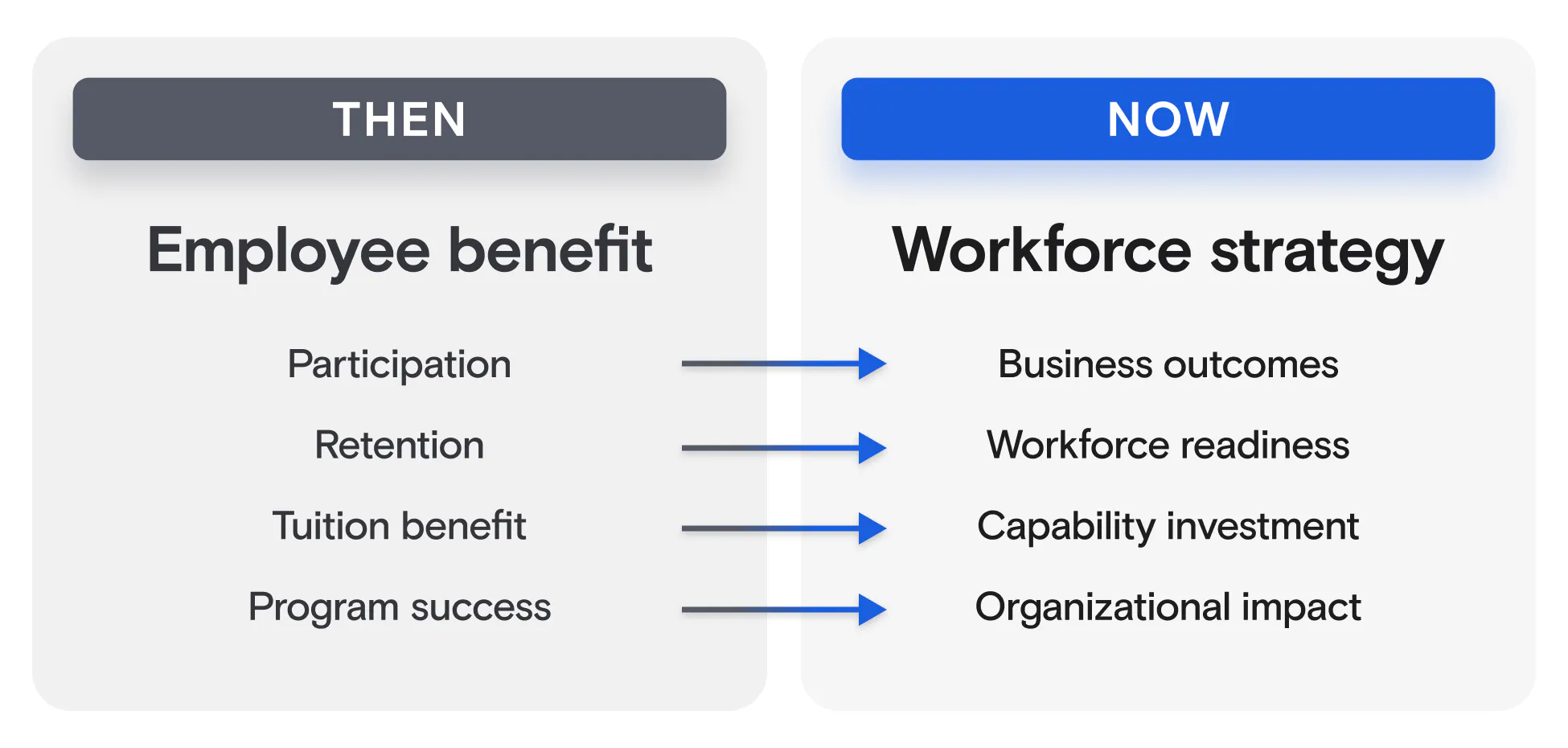
For years, the business case for employee education was straightforward: increase employee participation, improve retention, and support employee growth.
Those outcomes still matter, but at IMPACT 2026 —InStride’s annual summit for HR and L&D leaders— the consensus was that employee education now must be measured by more than retention alone.
During the panel “Making the Business Case for Learning: ROI That Wins Executive Buy-In,” education program leaders from leading healthcare and financial services organizations discussed how they are measuring education investments in a business environment where every dollar is under greater scrutiny.
Their takeaway: the strongest ROI stories do more than report a single number. They tell a complete story that connects education to the workforce challenges organizations are already trying to solve.
Retention matters, but it is only the starting point
Retention remains one of the clearest indicators that employee education is working. When employees participate in education programs and stay with the organization, that signals engagement, commitment, and a stronger connection between employee and employer.
But leaders are asking what happens next.
Are those employees moving into critical roles? Are they gaining skills the business needs? Are they advancing into higher-value positions? Are they helping the organization reduce reliance on external hiring or contract labor?
Internal mobility is where those answers show up first. When critical roles get harder to fill and workforce needs keep shifting, clearer pathways for employees to grow into the roles a business needs most matter more than relying on external hiring. Education is what makes that path real, turning career growth from something employees pursue on their own into a deliberate part of how the business plans its talent.
One healthcare leader summed it up this way: “Retention is cool, but it needs to tie to your business imperatives.”
For one healthcare organization, the challenge was indeed bigger than retention. The organization was facing critical shortages in surgical technologist roles, making it harder to meet staffing needs in an area directly connected to patient care and business operations. Half of leaders said surgical technologist roles were hard to hire for, and turnover in those roles was up significantly.
Education became part of the answer to this challenge. They designed an education initiative to build internal clinical pipelines that would help employees move into roles the organization needed most, surgical technologists included.
This gave the organization a more meaningful ROI story. Its surgical technologist program had 200 participants, 117 completions, almost 90 promotions, an 80% exam pass rate compared with a 72% national average, and 83% of participants are still employed with the organization.
The business case begins with a business problem
Strong employee education programs know the workforce challenges they are meant to solve.
For one healthcare organization, that meant building internal clinical talent pipelines. For another leading healthcare organization, education evolved from an employee program into a strategic talent initiative after the organization connected program participation to outcomes such as retention, promotion, performance, engagement, and cost avoidance. In fact, the organization has unlocked $10 million in cost avoidance tied to the program.
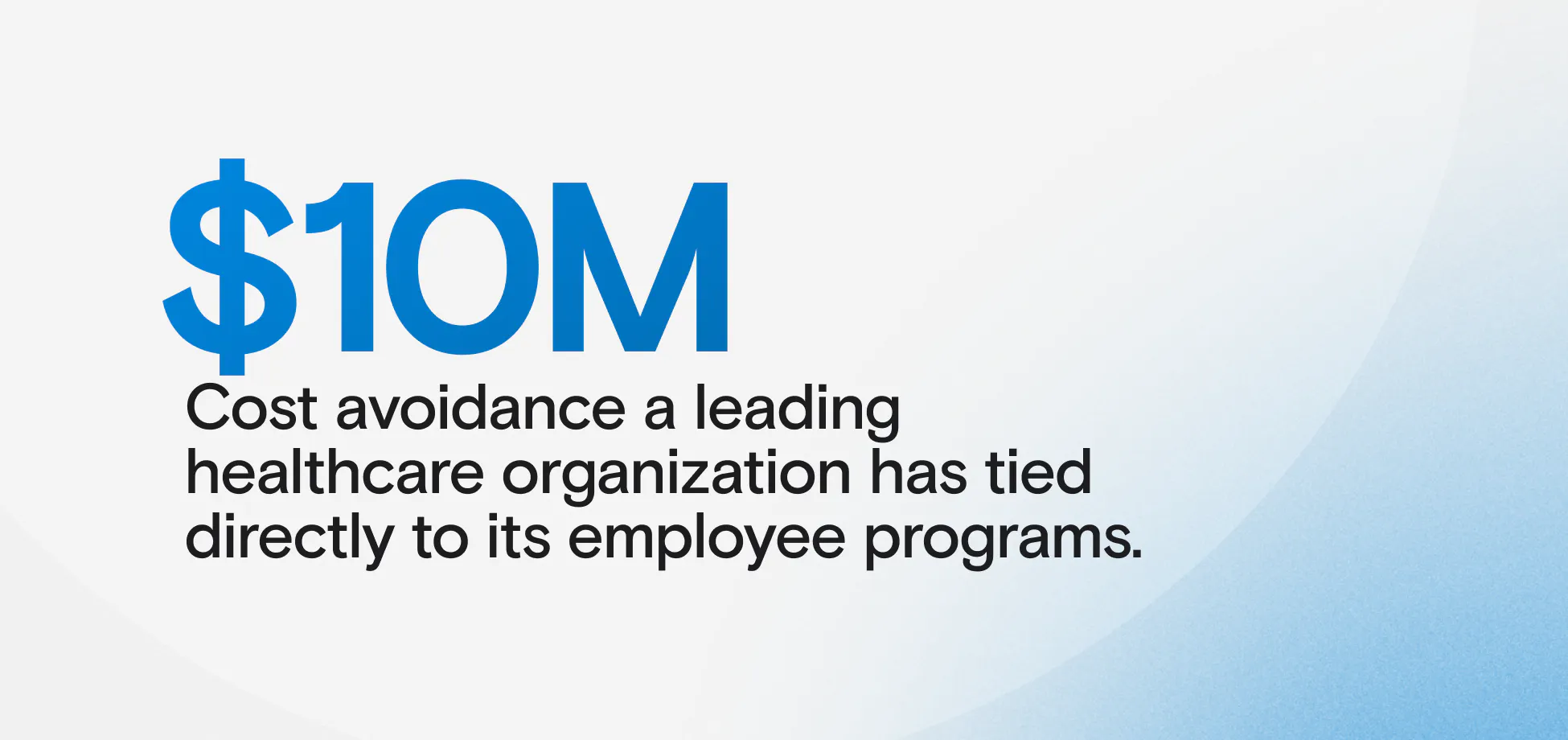
Cost avoidance a leading healthcare organization has tied directly to its employee education program
For a financial services organization, education became part of a broader employee experience and brand promise. Six years into its program, one HR Leader said that the program had become part of the organization’s DNA. At new hire orientation, when employees are asked how many joined because of the organization’s 100% education program, every hand goes up.
For another healthcare organization, the ROI conversations center on how learning supports the workforce the organization will need in the future. One talent and career development leader emphasized the importance of establishing a clear “north star” for the program. In this case, that meant getting learning in front of the organization’s lowest earners and connecting education to financial well-being, mobility, and future workforce needs.
ROI looks different depending on the audience
Another practical insight from the panel: ROI is not one-size-fits-all.
Different stakeholders care about different outcomes. A CHRO may want to understand retention, mobility, and engagement. A CFO may want to understand cost avoidance. An operations leader may care about staffing stability, productivity, and time-to-fill. A talent acquisition leader may care about employer brand and internal pipelines.
This means the business case for employee education cannot rely on one metric alone.
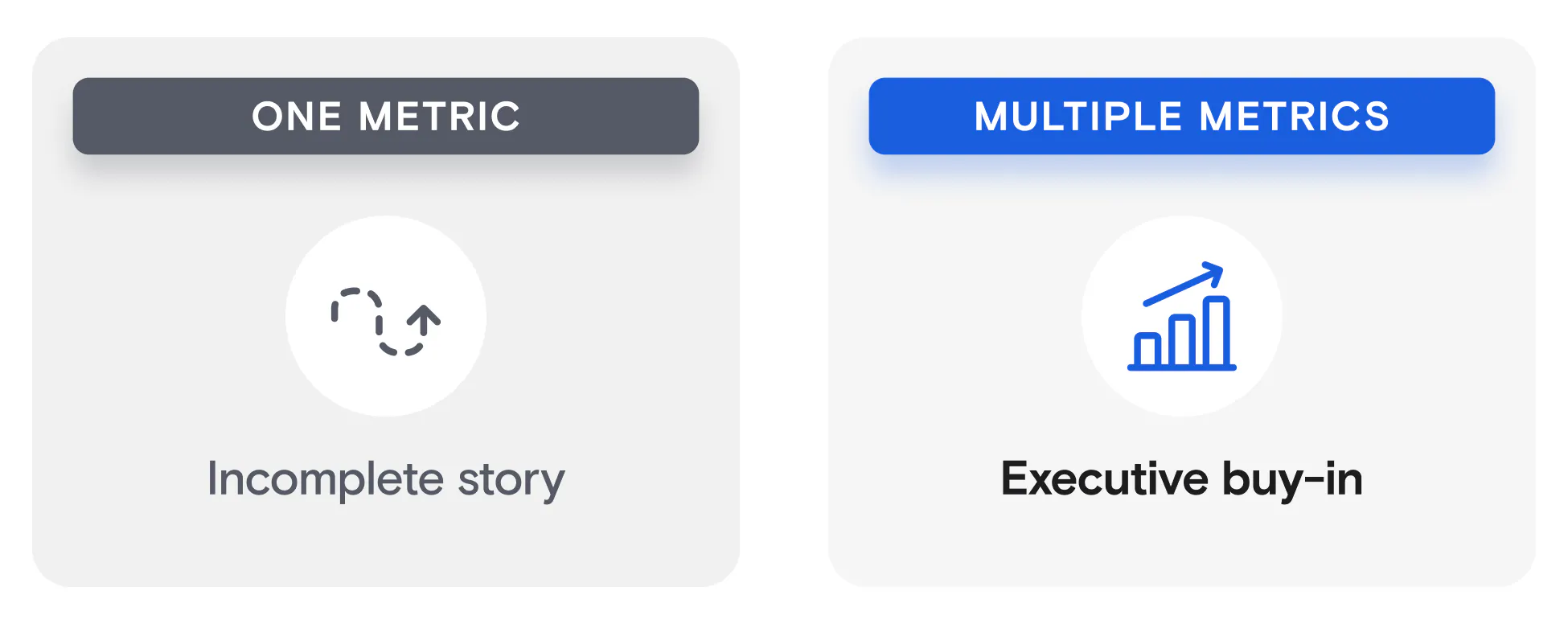
One healthcare organization's example made this clear. What began as a corporate responsibility investment grew into a broader talent strategy once the organization began looking at data across attrition, promotion rates, performance ratings, employee engagement, stay interviews and cost avoidance.
Leaders at the organization described data as a form of communication, noting that the metrics that resonate depend on the audience. The strongest ROI story speaks the language of the leader you are trying to reach.
Don’t wait for perfect data
One of the most useful messages from the panel was that organizations do not need perfect data to begin measuring impact.
Workforce data can be messy. Education participation, retention, mobility, performance, engagement, and long-term career outcomes do not always sit in one clean dashboard.
But that should not stop leaders from building the case.
One HR leader’s advice was direct: “Don’t get hung up on just one financial metric.”
Another healthcare leader echoed the same point when asked what attendees should do to strengthen their ROI story: “You must have multiple metrics.”
The goal is to build a credible, evolving picture of impact, one that combines financial outcomes, workforce outcomes, and employee stories.
The takeaway
The ROI conversation around employee education has matured.
It is no longer enough to say employees participated or stayed. Leaders want to know whether education is helping the organization build the workforce it needs next.
That means measuring outcomes such as retention, employee growth, cost avoidance, workforce readiness, vacancy reduction, engagement, performance, and wage progression.
At IMPACT 2026, industry experts agreed: employee education earns executive buy-in when it proves that people investments can solve business problems.
Learn how to get stronger ROI from your workforce learning investments.
A few questions we hear from workforce leaders
Why isn't retention enough to prove employee education is working anymore?
Retention shows employees are staying, but executive leaders increasingly want to know what happens next. Are employees moving into critical roles, building needed skills, improving performance, and reducing reliance on external hiring? Those workforce outcomes create a stronger business case than retention alone.
Why do different executives care about different ROI metrics?
ROI depends on who you're speaking to. A CFO may prioritize cost avoidance, while a CHRO focuses on retention and mobility. Operations leaders often care about staffing stability, and talent leaders may look at employer brand and internal talent pipelines.
What's changed about the way organizations think about workforce strategy?
Leading organizations no longer treat education as a standalone benefit. They're using it to solve workforce challenges by strengthening talent pipelines, supporting internal mobility, developing critical skills, and preparing for future workforce needs.